

5 Things to Do Before Your Custom Home Construction Starts in Sacramento
Most people think custom home construction really starts when the permits are approved and the builder breaks ground. In reality, the decisions that determine whether your home turns out the way you imagined, on budget, on schedule, without regret, happen far before any of that.
Here are five things every Sacramento custom home buyer should do before construction begins.
1. Lock In Your Budget With a Real Contingency
If your construction budget has no room for surprises, you're already behind.
Change orders happen on virtually every custom home build. Materials get substituted. Scope gets clarified mid-project. Something unexpected comes out of the ground. It's not a question of whether you'll encounter unexpected costs — it's a question of whether you're prepared for them when they arrive.
The industry standard is a contingency of 10–15% on top of your total construction cost. On an $800,000 build, that means holding $80,000–$120,000 in reserve. That number sounds uncomfortable until the alternative is stalling construction because you ran out of room in the budget.
Have an honest conversation with your builder:
Before you project starts, ask what's included in their contract and what typically triggers additional costs. If you’re builder avoids this conversation, consider it a red flag. The more clearly you understand your real exposure, the better positioned you are to make smart decisions throughout the build.

2. Make Sure Your Full Team Is Aligned Before Ground Breaks
The most expensive miscommunications in custom home construction don't happen during construction, they happen because the right people weren't talking to each other before it started.
Your architect designed the home. Your builder is responsible for building it. Your interior designer is making finish selections that affect structural and rough-in decisions. If these three aren't working from the same set of assumptions before the first shovel goes in the ground, gaps emerge, and gaps mid-build become change orders.
Before construction begins, make sure:
Your builder has reviewed and priced the actual permitted plans (not an early estimate from a preliminary design)
Your interior designer has flagged any selections that affect rough plumbing, electrical, or structural blocking — things that need to be addressed before walls close
Everyone has been introduced and knows who to call when a question comes up
A single pre-construction meeting with your architect, builder, and designer together is one of the highest-return hours you can invest in this process.
3. Walk Your Floor Plans at Full Scale Before Construction Begins
This is the step most Sacramento custom home buyers don't know exists — and the one they most often wish they'd taken.
Your architect's drawings are accurate. The dimensions are correct. The door swings are right. But here's the thing most people don't fully appreciate until they experience it: most people cannot truly read a floor plan until they're standing in the space.
Are you sure your plans reflect what you want from your new home?
The human brain isn't wired to translate two-dimensional drawings into three-dimensional spatial experience. Even people who work in design regularly describe moments of surprise when they first encounter a built space they've been looking at on paper for months. For the rest of us, that moment of surprise usually comes after walls are up — and by then, changes cost real money.
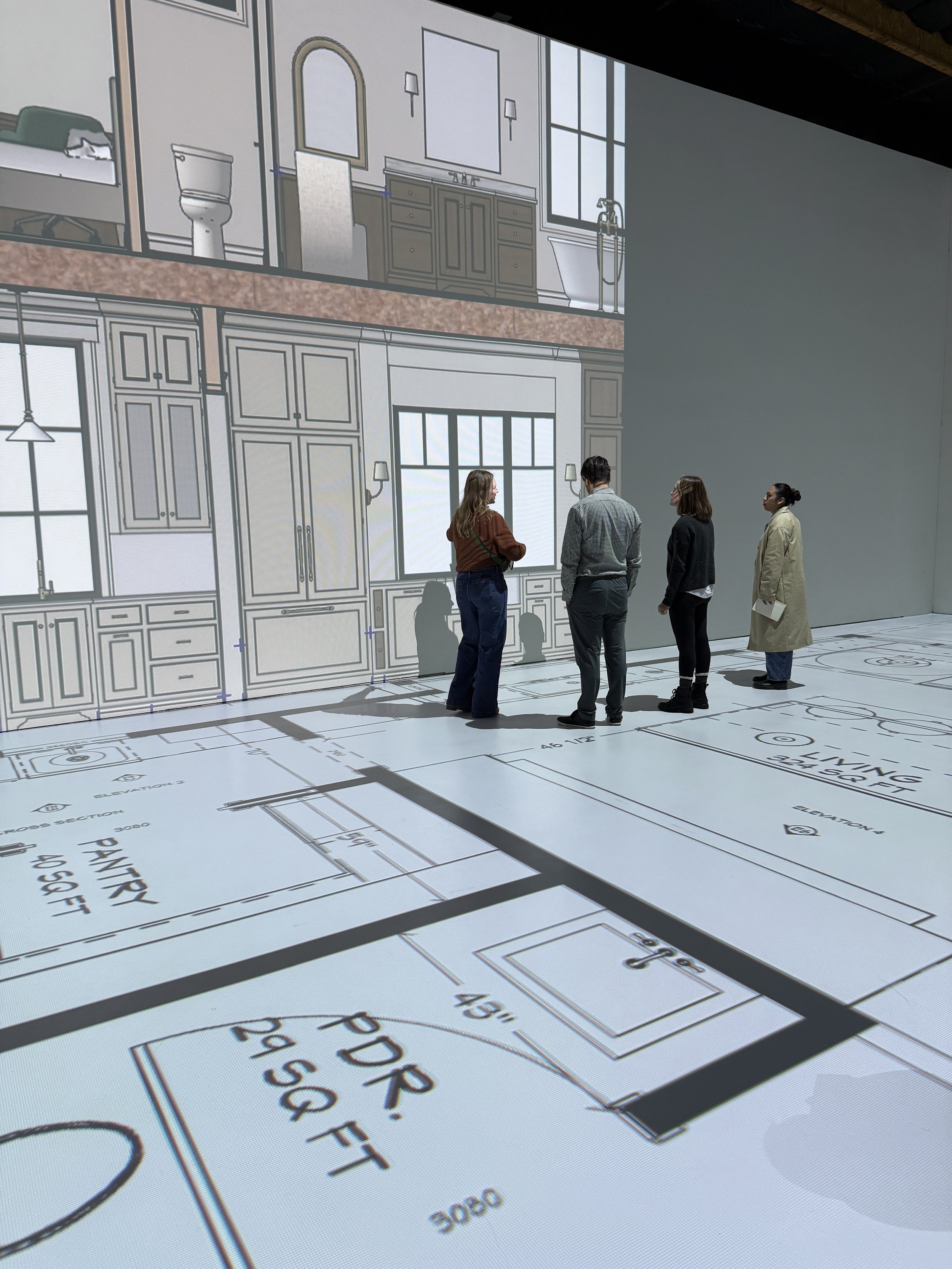
At Walk Your Plans Sacramento, we project your architect's plans onto our studio floor at full scale — every room, every wall, every doorway at 100% true size. You physically walk through the space, room by room, and experience it the way you'll actually live in it.
Why this is better than a frame walk?
At our studio, you’ll actually get to see how all elements interact. If you wait for a frame walk, you’re only seeing one element: the walls. When you walk your plans at full scale, you’ll experience not only the space, but how the door swings interact with furniture placement. How windows are placed with furniture.You'll feel whether the primary suite is as spacious as you imagined with all the elements laid out. You'll notice if the kitchen island creates a pinch point when two people are cooking. You'll see whether the dining room has enough room to pull chairs out comfortably. And if something doesn't feel right, you can make the change on the plans — not in the field.
We also test furniture placement in real time, so you can see exactly how your actual pieces will fit and flow before a single wall goes up.
This is the last low-cost decision you'll make before construction begins. Everything you catch in a session costs nothing to fix on a drawing. The same change during framing costs real money — and after finishes, it may not be fixable at all.
Sacramento and Northern California homeowners: sessions are available at our studio in Rancho Cordova. Learn more about what to expect →
4. Pre-Select Your Finishes Earlier Than You Think
One of the most common causes of construction delays on custom homes isn't permits or weather, it's finish selections that arrive too late.
Lead times on tile, cabinetry, fixtures, and specialty materials have gotten longer in recent years and can run anywhere from 6 to 20 weeks depending on the product. If your designer is selecting tile while your builder is ready to set it, your project sits idle while you wait. If the faucet you love is now suddenly backordered, you have to choose between stalling the schedule or compromising on a different piece.
The goal is to have your critical finish selections made, or at least narrowed to final options, before construction begins, not during it. Work with your designer to identify which selections have the longest lead times and prioritize those decisions first.
The categories that most often cause delays:
Custom cabinetry (kitchen, primary bath, built-ins)
Plumbing fixtures and hardware
Tile and stone requiring special order
Appliances, particularly oversized or specialty units
Exterior materials and windows on custom designs
Your builder should be able to tell you which selections need to be locked in by which milestone. Get that list early and treat it as seriously as your construction schedule.
5. Understand Your Permit and Inspection Timeline
Sacramento County and the surrounding jurisdictions — Placer County, El Dorado County, the City of Sacramento, Folsom, Roseville, and others — each have their own permitting processes, timelines, and inspection requirements. What takes six weeks in one jurisdiction can take four months in another.
Before your builder breaks ground, make sure you understand:
What permits have been issued versus what's still pending
What inspections are required and at what construction milestones
Whether any conditions were attached to your permit approval that could affect scope or timing
Who is responsible for scheduling inspections — you or your builder
Delays waiting on inspections are some of the most frustrating in the entire construction process because they're often unpredictable and outside anyone's control. The more you understand your local jurisdiction's process in advance, the fewer surprises you'll encounter.
The Common Thread
Every item on this list comes down to the same thing: decisions made before construction begins are cheaper, faster, and less stressful than the same decisions made during it. Custom home building is a long, complex process — but the window between plan finalization and construction start is the highest-leverage moment in the entire project. Use it.
Thinking about Step 3? Walk Your Plans makes it easy. Sessions are available at our Rancho Cordova studio and serve homeowners throughout Sacramento and Northern California.
