

The Story Behind Walk Your Plans
Some ideas don’t start in boardrooms. They start in real life, usually right after someone says, “Wait… how did we miss that?” Walk Your Plans began with a problem that felt painfully familiar to anyone who has ever built, remodeled, or designed a space.
The Moment It Clicked

“No one caught it on the plans. No one flagged it in elevations. And by the time it was obvious, the house was already built.”
The founder of Walk Your Plans did not come from the construction industry. Instead, they were developing a short term rental property, an investment designed to host large groups. On paper, everything looked great. The home could sleep a dozen or more people. Bedrooms were plentiful. Bathrooms were accounted for. Square footage checked out.
But once the home was built, reality hit.
The so called great room was not great at all. It was fine. Maybe even just good. In practice, it comfortably seated five or six people, nowhere near the dozen guests the house was designed to host. No one caught it on the plans. No one flagged it in elevations. And by the time it was obvious, the house was already built.
What were they supposed to do, tear out half the home and start over? That frustration sparked a bigger realization. This was not just their problem. It was an industry wide issue.
The Problem With Paper and Screens
Traditional plans require people to interpret scale, flow, and function from drawings that are reduced to paper or screens. Even experienced professionals miss things. Clients nod along, thinking they understand, until it is too late. Square footage does not tell you how a room feels. And that gap between intention and reality is where costly change orders, disappointments, and compromised designs are born.
The solution was simple in concept and powerful in execution. Let people walk their plans at full scale before building.
By projecting floor plans at life size and allowing people to physically walk through them, Walk Your Plans turned abstract drawings into something instantly understandable. Flow, spacing, furniture placement, and sightlines all become obvious when it is under your feet. Early on, it was clear this was not just helpful. It was transformative.

“Across Walk Your Plans content, videos have generated more than 220 million views worldwide and sparked over 5,000 licensing inquiries from around the globe.”
When the World Took Notice
In April 2023, a short video showing people walking their plans went viral on Instagram. 4 million views followed almost overnight.
Ten months later, it happened again. Another video reached 37 million views.
The momentum did not slow down. Across Walk Your Plans content, videos have generated more than 220 million views worldwide and sparked over 5,000 licensing inquiries from around the globe. People from every corner of the construction and design world saw the same thing. This solves a problem we all deal with.
Today, Walk Your Plans has plans to operate in 120 territories, with 50 and growing already spoken for. The brand has also established key global partnerships, including a Global partnership with Panasonic, reinforcing both the technical credibility and scalability of the platform.
As awareness has grown, so has interest from major media outlets and national platforms. Walk Your Plans continues to attract attention from large networks exploring how this technology can reshape the way spaces are designed, communicated, and built. While the specifics are still evolving, the level of interest signals something important. This is not a trend. It is a shift.
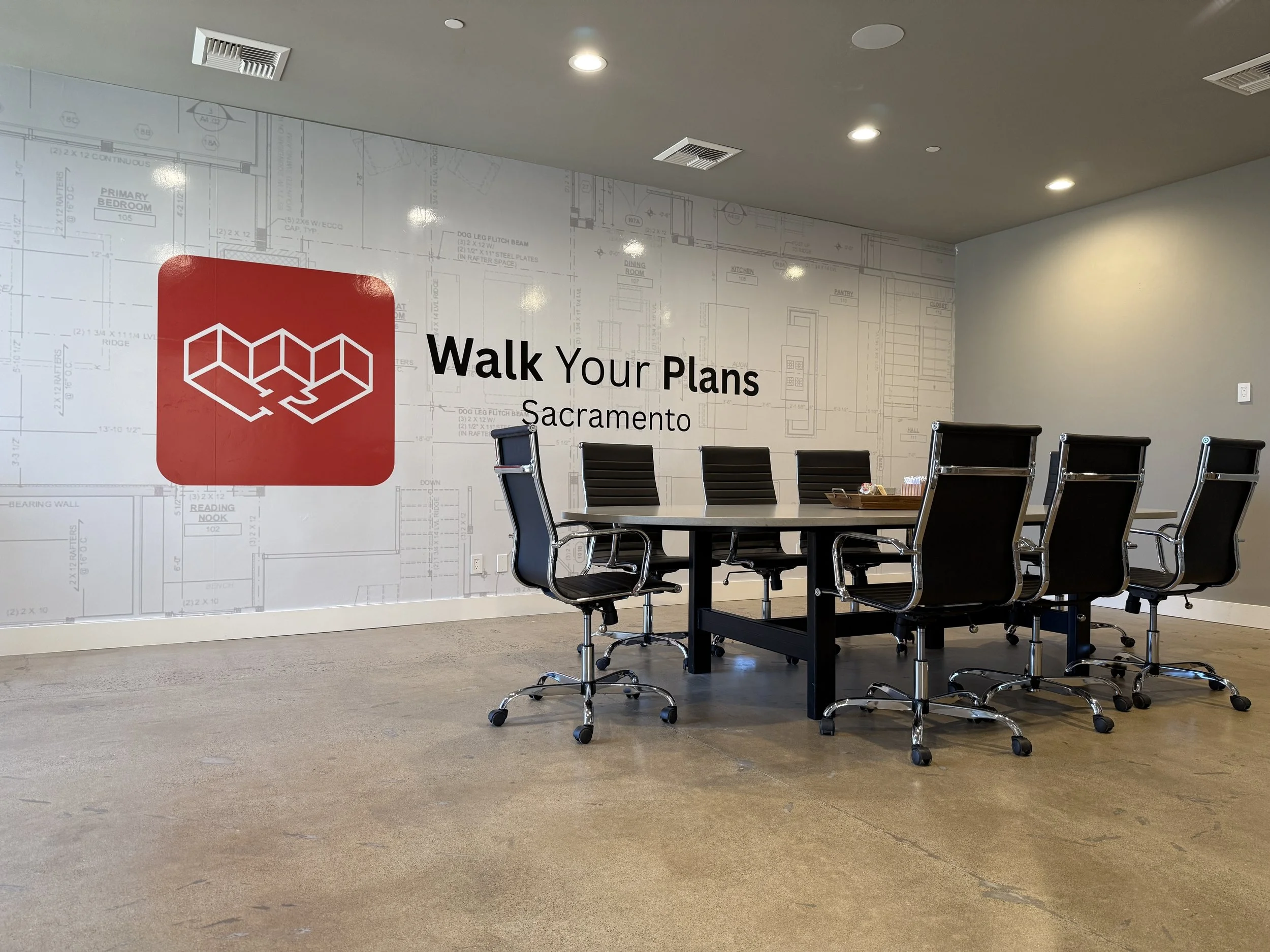
“Life size projections are being used not only for homes, but also for commercial projects, landscape design, public works, art installations, event planning, and more.”
Bringing Walk Your Plans to Sacramento
Sacramento became part of this story in the fall of 2025, when Beth Williams opened the 23rd Walk Your Plans location.
Seeing firsthand how often clients struggled to truly understand plans on paper, Beth immediately recognized the value of this technology. She often says that walking plans at scale translates blueprints into a language everyone understands.
Learn more about Beth and her story →
What started primarily as a residential tool is now crossing industry lines in Sacramento and across the country. Life size projections are being used not only for homes, but also for commercial projects, landscape design, public works, art installations, event planning, and more.
Designers, builders, business owners, and municipalities are all finding new ways to use the same core idea. If you can walk it, you can understand it.
Looking Ahead
Walk Your Plans exists because one real project exposed a painful truth. You cannot truly understand a space until you experience it.
By catching issues early, teams save time, money, and frustration. Clients gain confidence. Professionals align faster. Projects move forward with clarity instead of assumptions. What began with a missed opportunity in a so called great room has become a new way of thinking about pre construction.
The sky is the limit for how we can utilize this technology.
